top of page

Sergei Rachmaninoff's FAQ
Everything you always wanted to know about Sergei Rachmaninoff
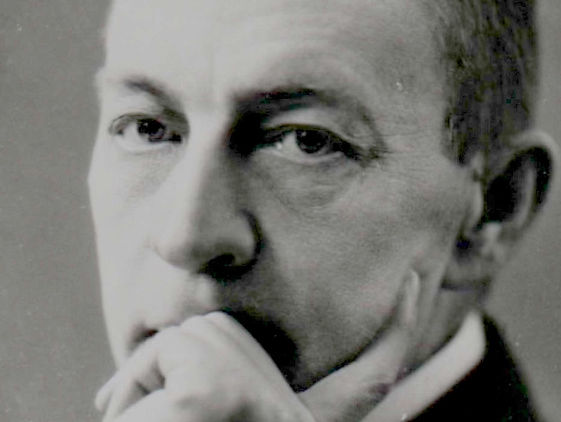
Rachmaninoff, Rachmaninov, Rakhmaninov, Rachmaninof or Rachmaninow?
Any name that is transcribed from the Cyrillic alphabet can be varied depending on the phonetics of the language into which it is transcribed. Different languages have different methods - and within some languages these methods may vary. Fortunately, the variations for the name Rachmaninoff are not that different. They revolve around the transcription of two letters. First of all, the Cyrillic 'x'. This is usually transcribed as 'ch', but occasionally (in line with the transcription of Arabic names, for example) as 'kh'. Secondly, there are numerous variants for the Cyrillic 'b'. This is usually transcribed as 'w' in German, as 'v' in English and Dutch, and as 'ff' in French. The dispute about the transcription of this letter also has a phonetic background. The Russian pronunciation of Rachmaninoff is closer to the sharp 'f' than to the soft 'v' or 'w'.
Many Russians care about the transcription of their names. Sometimes because their names are not Russian to begin with (i.e. Schnittke, Medtner) but often such preferences are also guided by a personal preference for a specific language and, perhaps also the status associated with it. In Rachmaninoff's time, nobility often preferred the French language, with which they often understood each other in their circles.
Rachmaninoff was certainly proud of his origins. He preferred the French variant for his surname. However, he did not include his first name in this. He preferred 'Sergei' to 'Serge'. The latter could lead one to suspect that there was also a phonetic motivation behind his preference for 'ff'. Be that as it may, Rachmaninoff himself always wrote “Rachmaninoff”. The Rachmaninoff Network respects his wishes.
Rachmaninoff’s hands
Sergei Rachmaninoff had a gigantic handspan. Its size even led to articles in medical journals. Rachmaninoff’s compositions are full of wide chords and represent a challenge for pianists with smaller hands. At the same time, he was certainly not the only composer of his time to use such large chords for the piano. Indeed, often it is not so much the sheer span of Rachmaninoff’s chords, but their continued succession and speed that demand the utmost in terms of endurance, accuracy and concentration on the part of performers.
read more
Was Rachmaninoff depressed?
Rachmaninoff was inclined to the gloomy, but this did not reduce him to passivity. There is no manic pattern to be recognized in his mental state and there are clear causes to be named for the two crises in his life (1901 & 1916). His brutally disrupted childhood and the divorce of his parents burdened him early on. Later, when he was expelled from the household of his piano teacher Nikolai Zverev as an adolescent, he was taken in by the family of his aunt Varvara, and eventually married one of her daughters. In a letter to Marietta Shaginian, Rachmaninoff implies that his two cousins - his wife Natalia and his sister-in-law Sophie - are ‘his doctors’. RCA producer Charles O’Connell (who as a main business associate had access to the inner circle, but was not considered part of it) noted the following: ‘He was grave but not grieving, and often disclosed a healthy cynicism, a wry humor, that were marks of a vital and eupeptic personality.’
read more
How tall was Rachmaninoff?
6’3’’ (190.50 cm) According to his application for US citizenship. [link to applicationform on our website] This certainly did not make him the tallest musical celebrity of his time. His friend Féodor Chaliapine measured 6’5’’. Rachmaninoff however, appeared extra tall because of his build - not corpulent at all, long face, high cheekbones, relatively narrow shoulders. A hereditary background cannot be ruled out. A photo of him and male family members shows that Rachmaninoff was not the only one of long stature. Some of his descendants are also noticeably tall - taller even than the composer himself.
Rachmaninoff’s voice
In addition to Rachmaninoff's appearance, his height and his hands, his voice also made a deep impression on his contemporaries. Finding a recording of the master speaking has therefore become something of a holy grail for modern fans. Correspondence from the Library of Congress reveals that there once existed a recording of a speech Rachmaninoff gave on the occasion of his Golden Jubilee, but that the record got broken. Anyone who sat in the front row at Rachmaninoff's recitals, such as the Dutch pianist Cor de Groot, could often hear the composer humming along as he played. In the recording studio he must have held back, although on some recordings - such as that of Chopin's Third Ballade - his humming can occasionally be made out just above the music and record noise. On the Marston CD Rachmaninoff plays Symphonic Dances however, he can be heard both speaking and, in particular, singing along while playing his Symphonic Dances to Eugene Ormandy. https://www.marstonrecords.com/collections/piano/products/rachmaninoff
Rachmaninoff’s favourite dishes
Although the Rachmaninoffs employed Russian staff, they do not seem to have had preference for typical Russian meals. Lighter, Western European dishes were usually served, such as pasta and chicken dishes. An Italian wine preferably accompanied these. In the evening coffee and liqueur, talk and card games followed.
bottom of page